Description
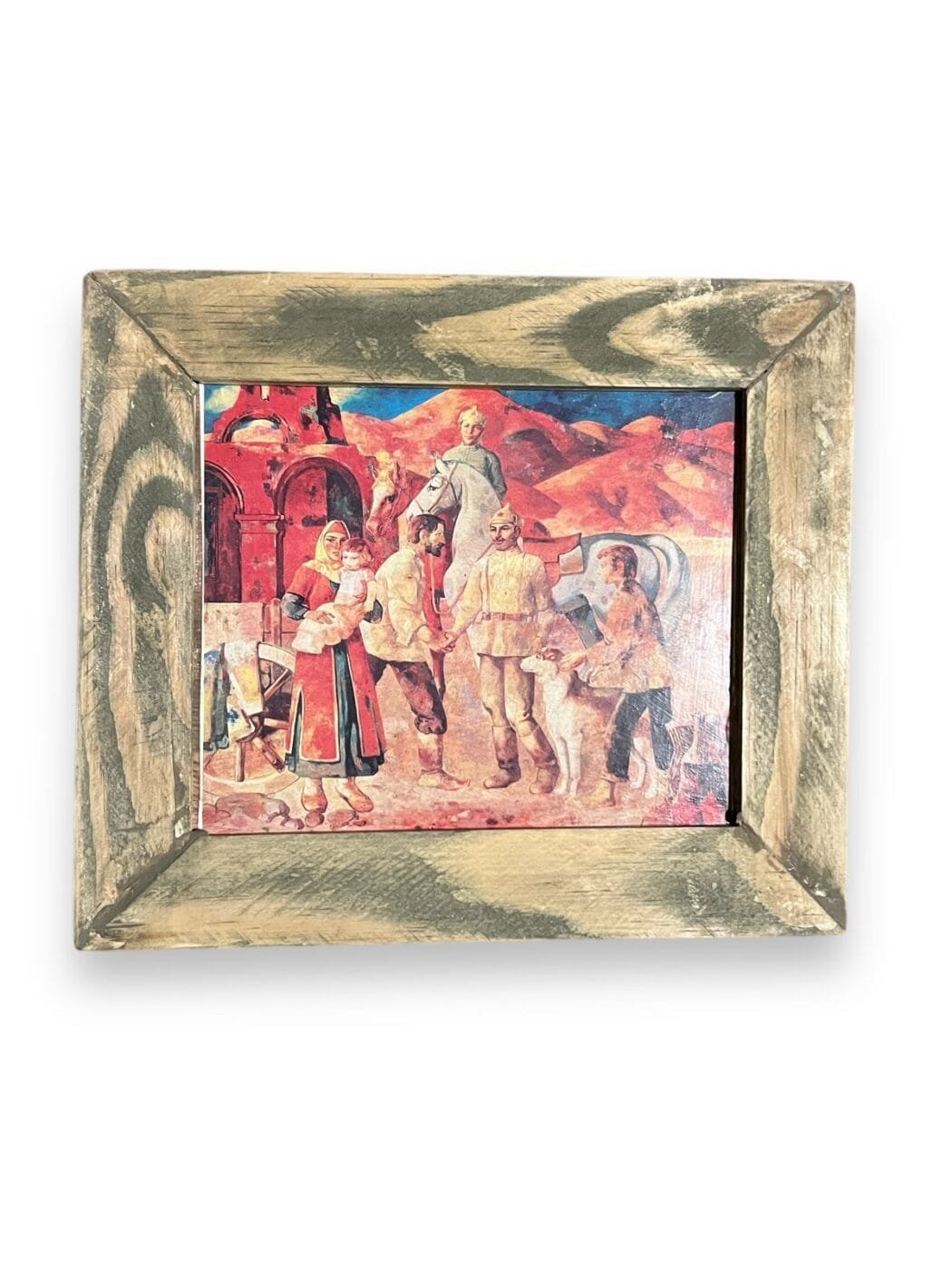
“Полдник” (Poldnik), which translates to “Afternoon Snack” or “Luncheon,” by the Soviet-era Russian artist Igor Aleksandrovich Ionchenkov.
The piece depicts a scene of traditional rural Russian life, featuring figures in folk clothing gathered around a small table near a red outdoor stove and a horse-drawn cart. The artist, I. A. Ionchenkov, painted the original in 1977.
Is a notable example of Socialist Realism, the official and state-mandated art style of the Soviet Union.
Artistic Style:
Socialist Realism: This style required artists to create optimistic, easily understandable art that glorified the lives of the working class and promoted Soviet ideals. The focus was on form and clarity rather than abstraction or individual emotional expression.
Realism and Detail: The artwork is highly representational and naturalistic, depicting the subjects and setting in a realistic manner, a characteristic of the dominant style of the era.
Genre Painting: The painting falls under the category of genre painting, which depicts scenes from everyday life.
Meaning Behind the Scene:
The painting is a celebration of rural Soviet life and labor.
Contentment and Prosperity: The scene is intended to portray the simple, healthy, and contented life of agricultural workers. The figures, including a woman holding a baby, a man on a horse, and a worker with a dog, are shown taking a break together, suggesting community and shared purpose.
Glorification of Labor: The image is a piece of propaganda designed to show the success of the Soviet collective farm system, highlighting the abundance of food (the “afternoon snack”) and the positive outcomes of communal work.
Idealism: The vibrant colors and clear, strong composition present an idealized vision of the working people, with an emphasis on their human dignity and strength.



Reviews
There are no reviews yet.